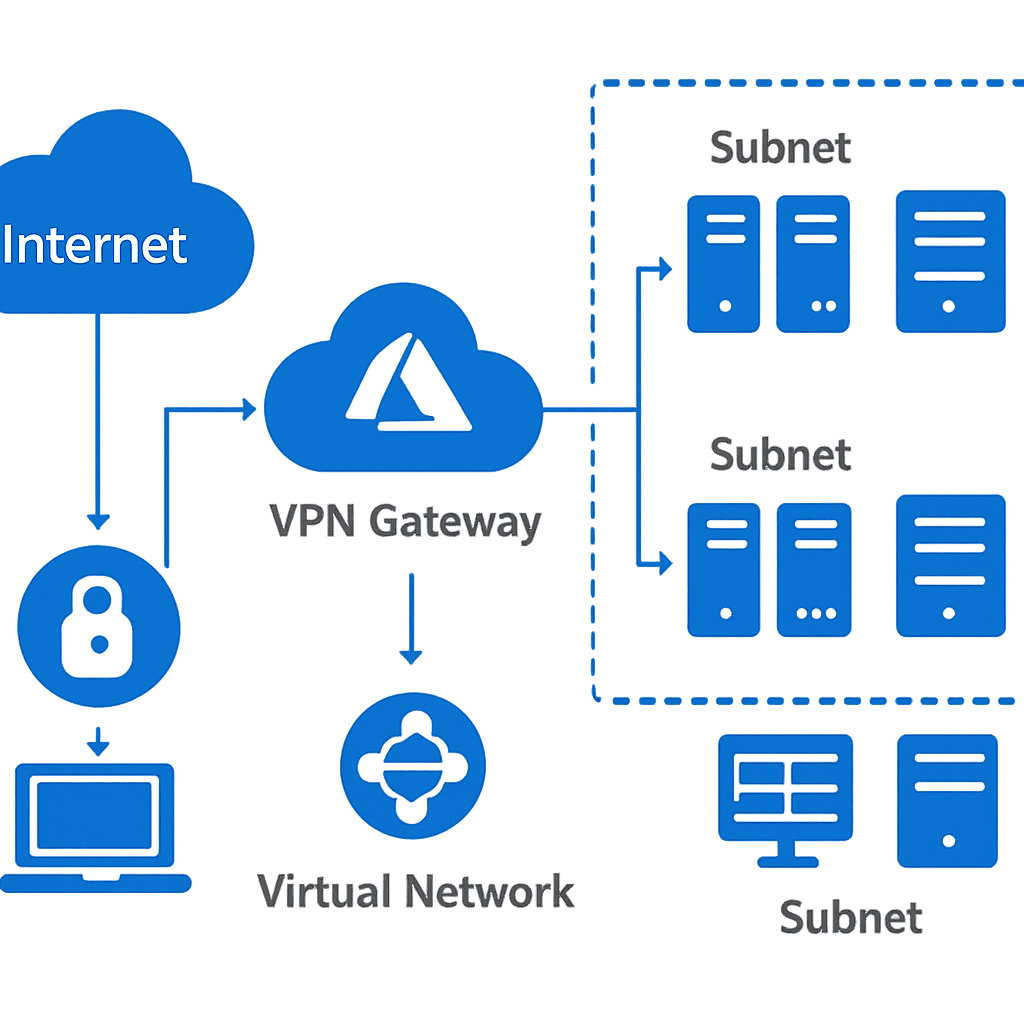
What it is: A logically isolated network for your Azure resources — like a virtual version of a traditional on-premises network.
You’re hosting a 3-tier web app:
What it is: Rules that allow/deny traffic at subnet or NIC level.
Use Case: Allow port 443 only for public access to a web app, while port 1433 (SQL Server) is only open to internal subnet.
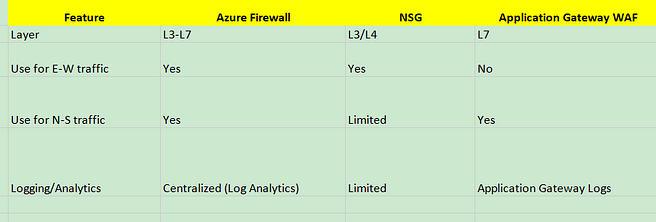
Use URL path-based routing to route:
/api/* → App Service A/admin/* → App Service BBackend VMs in VMSS behind Load Balancer for app scaling.
Your web app is deployed in East US and West Europe. Azure Front Door automatically routes Indian users to East US (lowest latency).
Securely access Azure PaaS (like Azure SQL, Blob, etc.) via private IP.
Your app in VNet needs to access an Azure SQL DB without exposing it to the public internet.
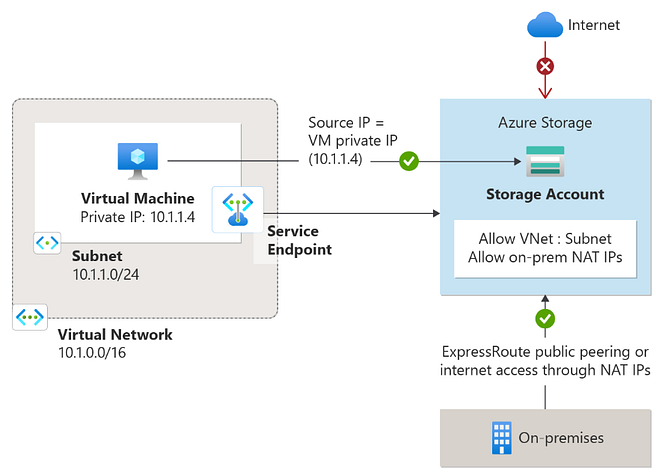
Service endpoints extend your virtual network private address space and the identity of your virtual network to the Azure services, over a direct connection. Endpoints allow you to secure your critical Azure service resources to only your virtual networks. Traffic from your virtual network to the Azure service always remains on the Microsoft Azure backbone network.
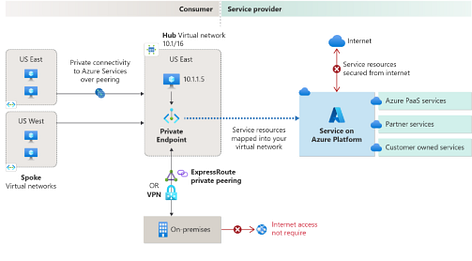
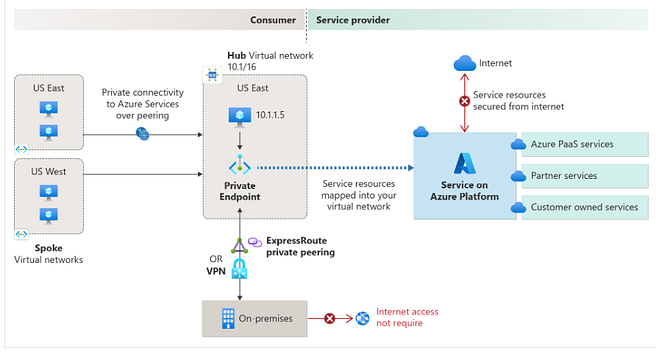
Azure Private Link enables you to access Azure PaaS Services (for example, Azure Storage and SQL Database) and Azure hosted customer-owned/partner services over a private endpoint in your virtual network. Traffic between your virtual network and the service travels through the Microsoft backbone network. Exposing your service to the public internet is no longer necessary. You can create your own private link service in your virtual network and deliver it to your customers.

Private dedicated fiber connection from on-prem to Azure (not over public internet).
Use Case: A bank hosts sensitive apps in Azure but uses ExpressRoute to comply with regulatory needs.
Site-to-site or point-to-site connection to Azure via IPsec/IKE.
Scenario: Your dev team connects from home via VPN Gateway for secure dev/
