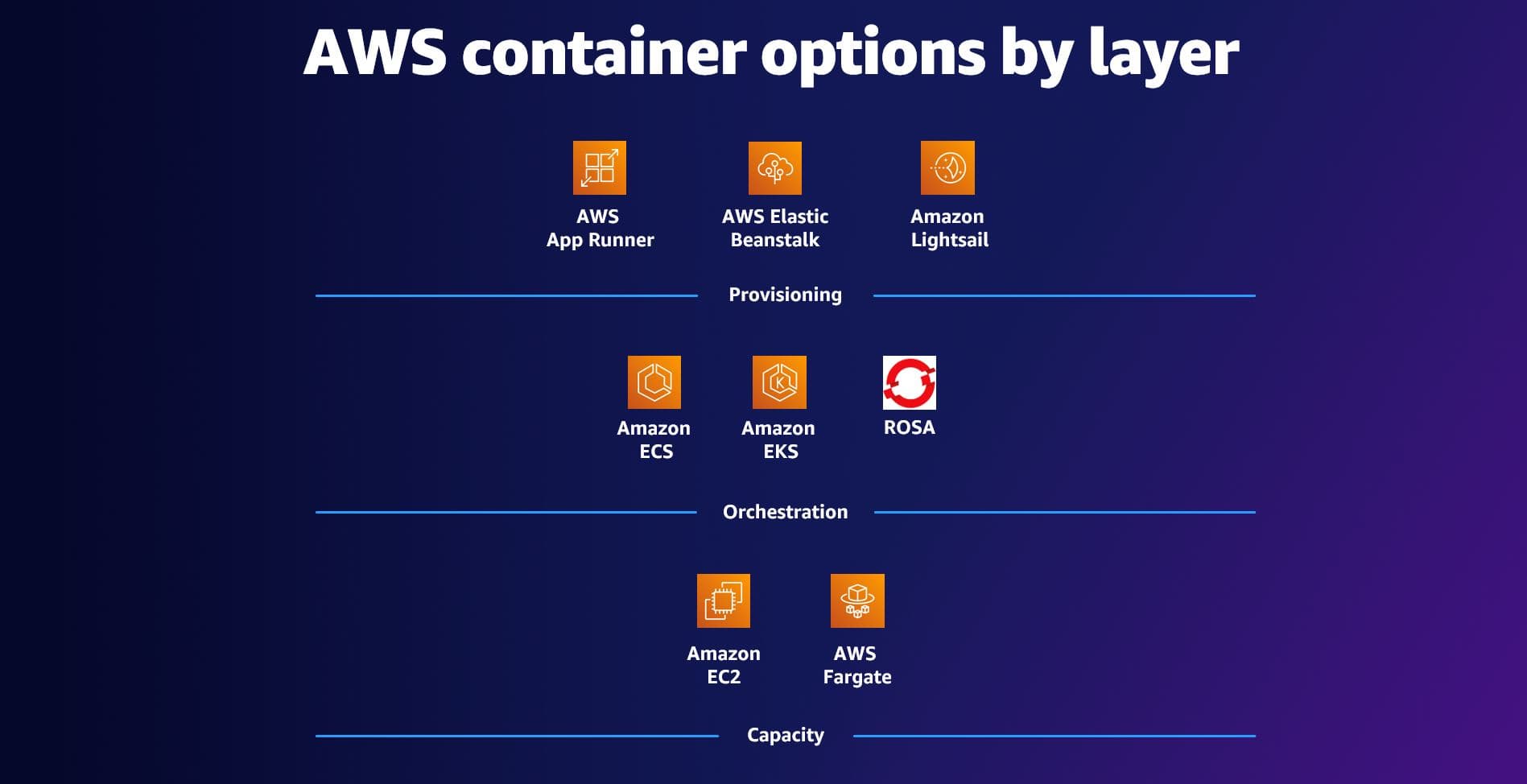

AWS offers 3 mature container services, based on your organisation’s level of comfort with container deployments, use cases and cost constraints. The 3 most common deployments are ECS, EKS, and Fargate.
Example Scenario: Imagine you’re developing a microservices-based e-commerce platform. With Amazon ECS, you can containerise each microservice, such as user authentication, inventory management, and payment processing. ECS will handle the deployment, scaling, and load balancing of these containers, ensuring seamless integration and efficient resource utilization.
Example Scenario: Suppose you’re building a data analytics platform that processes large volumes of data. With Amazon EKS, you can deploy your analytics application using Kubernetes. EKS manages the underlying Kubernetes infrastructure, such as control plane management and worker node provisioning. This allows you to focus on data processing logic and leveraging Kubernetes features like autoscaling to handle varying workloads.
Example Scenario: Imagine you’re developing a chat application that requires real-time messaging capabilities. With AWS Fargate, you can deploy a containerised chat server. Fargate automatically manages the container resources, scaling up or down based on the number of active users. This ensures seamless communication and eliminates the need for manual infrastructure management.
